Choosing Personal Projects
5 minutes
A lot of people will tell you that when learning a new skill, the best way to cement the concepts and techniques is by making your own projects. At some point in your learning journey, you’ll want to step outside the realm of tutorials and courses and produce something of your own. However, it is important that you don’t choose projects that are too difficult, as they could potentially lead you to quitting, and that aren’t too easy, as that means you aren’t learning anything new. My approach to choosing personal projects is something I’ve developed over the last few years, and though I’m here to share that with you, just remember that everyone is different, so feel free to take what I say with a grain of salt. Now, let’s talk about what I believe is the best approach to choosing personal projects.
Completion Is Key
The first thing to remember is that the completion of projects is drastically more important than the actual scope of the project. What I mean is don’t sweat the actual project and how unique or useful it is to you or anyone else. That isn’t the point when you’re learning. The point of a personal project is to help you master your current tools and techniques; it isn’t to make the next multimillion dollar product.
Choosing projects that you can comfortably finish will give your brain a rush of dopamine that will positively reinforce the learning process, increasing your confidence and pushing you further along in your journey. If you constantly bite off more than you can chew, you’ll fail at seeing a project through to the end, which will impact your morale each time, eventually leading you to quit.
I want to clarify: I’m not saying failure is something you should avoid at all costs. Naturally, you are going to fail at certain things along your journey, and that is okay. It’s just part of the deal. What I’m trying to say is failure comes in two forms:
- You can fail because you haven’t figured out the strategy to tackle the project you are trying to complete, but you do have the necessary skills to complete the project if you work through the problems in front of you i.e., you have the necessary tools to overcome the obstacle in your way, you just have to work out how to use them to do so through trial and error.
- Another way you can fail is if you take on projects that are way too difficult for you at your current skill level. Projects like that give you the illusion that you’re incompetent and incapable of mastering the skill, which isn’t true i.e., you do not possess the necessary tools to overcome the obstacle in your way just yet, but you will eventually, you’re just jumping too far ahead.
Choosing the right projects to work on will let you avoid the second kind of failure and save you from quitting prematurely. My favorite way of putting all this into a neat bundle is using “The Project Circle”, a personal creation of mine that helps me visualize all these rules.
The Project Circle
I’m sure you’ve heard the saying “step outside your comfort zone” at least once in your life (though I’d be willing to bet it’s far more than once). Though I agree with it, I think it’s incomplete and a little misleading. Let’s take a look at the diagram below so I can explain further:
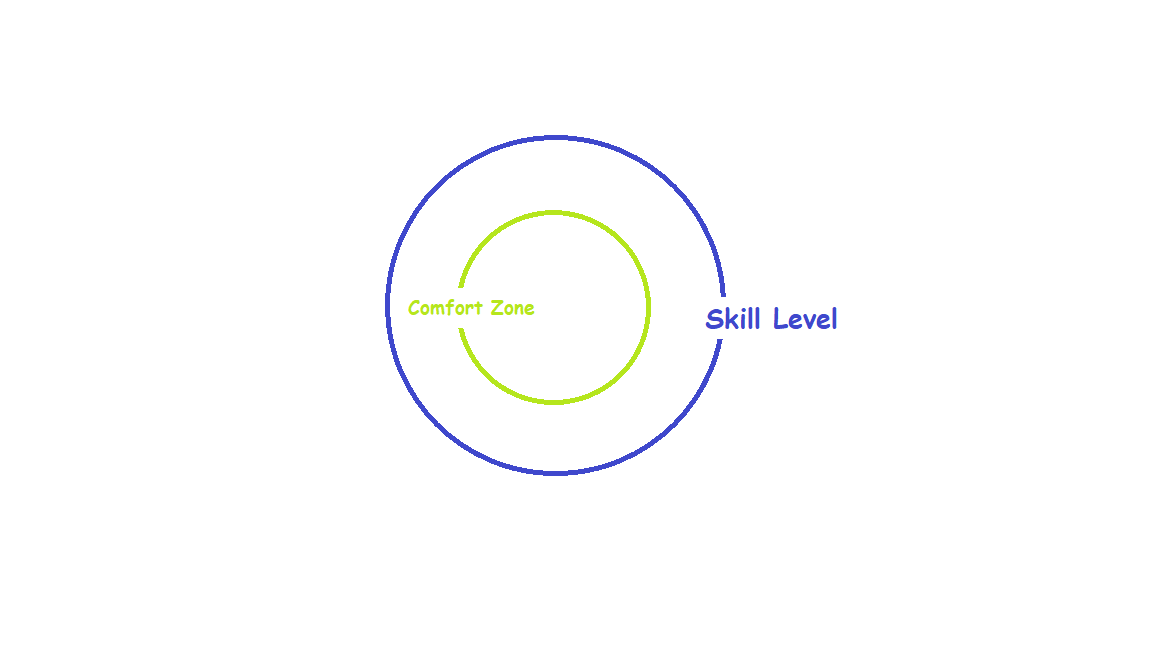
Here, we have 2 circles: We have the green circle that represents your “Comfort Zone”. This is where we all like to stay as it feels familiar and safe. You’ll notice we also have a blue circle that represents your current “Skill Zone” or “Skill Level”. This is the circle that no one talks about.
What is your Skill Level? Think of your skill level as defining your abilities and what you’re ‘capable’ of doing. It houses all the knowledge you’ve acquired about a specific topic, including those things you’ve practiced and mastered (held inside your comfort zone), but also those that you haven’t yet put into action i.e., things that you know about, but haven’t yet practiced. Your skill level is what allows you to gauge whether or not you’re ready to tackle something. Think of it this way, as someone who has never started a business in their life, being a CEO would be far outside of your skill level.
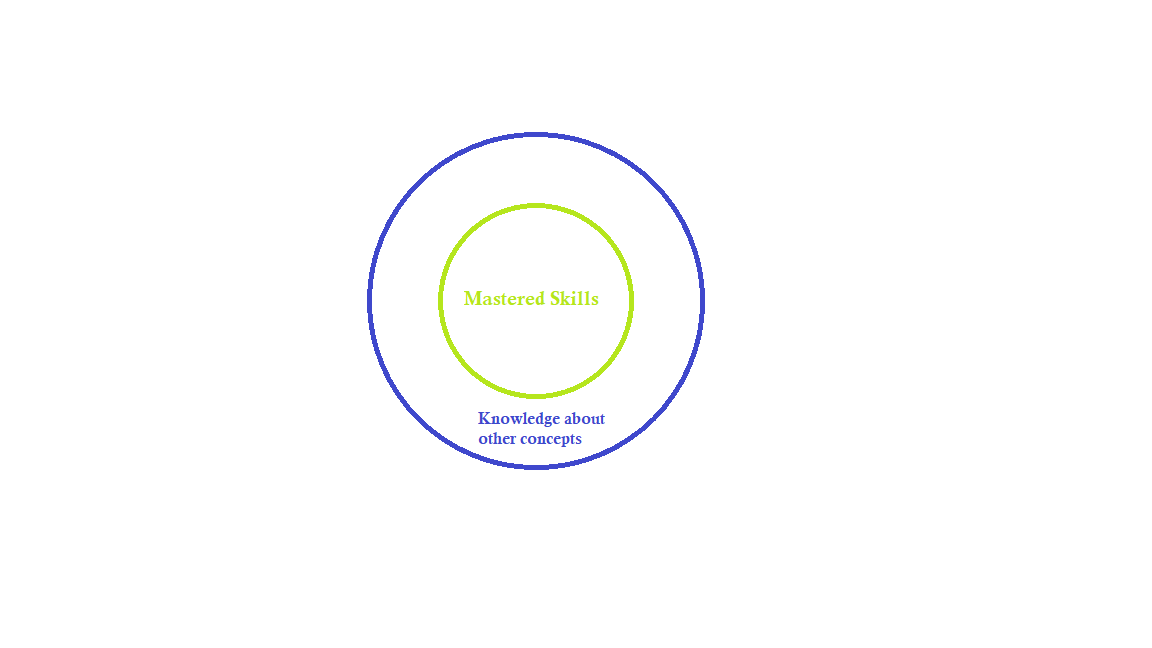
In order to grow your skill level, you need to spend some time learning and reading-up on new tools and techniques relating to whatever you’re trying to achieve. For example, let’s say you’re learning how to draw portraits. In order to expand your skill level, you may read books and watch videos about body proportions. Acquiring that knowledge now allows you to go and start practicing that particular technique, without being too lost or confused, in order to solidify the concepts in your head.
Remember these basic rules: To grow your Skill Level, you must learn about new tools and techniques. To grow your Comfort Zone, you must practice those new tools and techniques.
When you choose a personal project, the project can land in one of the 3 main zones inside the Project Circle, each given a different color on the diagram below:

White: These projects will be easy to complete as you’re using tools and techniques that you’ve already mastered, but you won’t make significant progress towards your goal as you’re just repeating what you already know.
Red: These projects will be very difficult to complete as you lack the necessary tools and techniques required to execute them. You will most likely fail at completing them, leading to a loss in motivation and confidence in your abilities.
Yellow: These projects are the best kinds. They will be moderately difficult, but you will have the best chance and completing them because you have enough knowledge and skill to finish the project. These projects will allow you to practice new tools and techniques and grow your comfort zone to include those.
All of this can be summarized to say: The best personal projects are those that lie outside of your comfort zone, but inside of your skill level.
Conclusion
When choosing a personal project, it’s important to understand that completion is key. Seeing a project through from start to finish will give you the sense of accomplishment and confidence you need to continue your learning journey, not to mention it also improves your planning and management abilities. Remember to choose projects that lie outside of your comfort zone, to ensure you’re cementing new ideas, but that aren’t too far outside of your skill level, to ensure you don’t bite off more than you can chew. This will give you the best return on your investment and propel you towards mastery.